01
Get the use case first
A hot tub, a mower shed, and a welding shop need different slabs. We start with what sits on it, what drives on it, and what might change in five years.
Sheds, shops, hot tubs, RV pads, and pool equipment all ask something different of the concrete under them. We pour pads matched to the load and the spot, prepared for soil that spends every summer shrinking away from slab edges.
Credibility comes from how it's built, not from promises. Here's the order of operations on every concrete pads & slabs job.
A hot tub, a mower shed, and a welding shop need different slabs. We start with what sits on it, what drives on it, and what might change in five years.
We place the pad where water will leave it rather than pool against it, and check clearances, gates, and access before committing to a spot.
The pad gets excavation to uniform material and a compacted base. Edge exposure is the enemy on shrink-swell soil, so pad edges and the surrounding grade get specific attention.
Thickness, reinforcement, and mix follow the load: a four-inch pad for a shed is honest work, while an RV or shop slab gets more. Anchor bolts, post brackets, or conduit sleeves are set while the concrete is wet.
Joints are cut where the pad needs them, the slab is cured on schedule, and we confirm the finished elevation and slope against what the equipment or building requires.
Most contractors vanish after the deposit. We pick up the phone, show up when we say, and stand behind the work after the truck leaves. The follow-through is the difference.
A foreman we know runs your job and a vetted crew does the work, managed by Lucky's, one company accountable from the first call to the final walkthrough.
COI and lien waivers on file before we break ground. The documentation that lets commercial clients pay and gives homeowners peace of mind.
Prepped subgrade, reinforced and mixed to spec for the job, and proper curing. We build credibility through the process, not promises. On concrete pads & slabs, that starts with get the use case first.
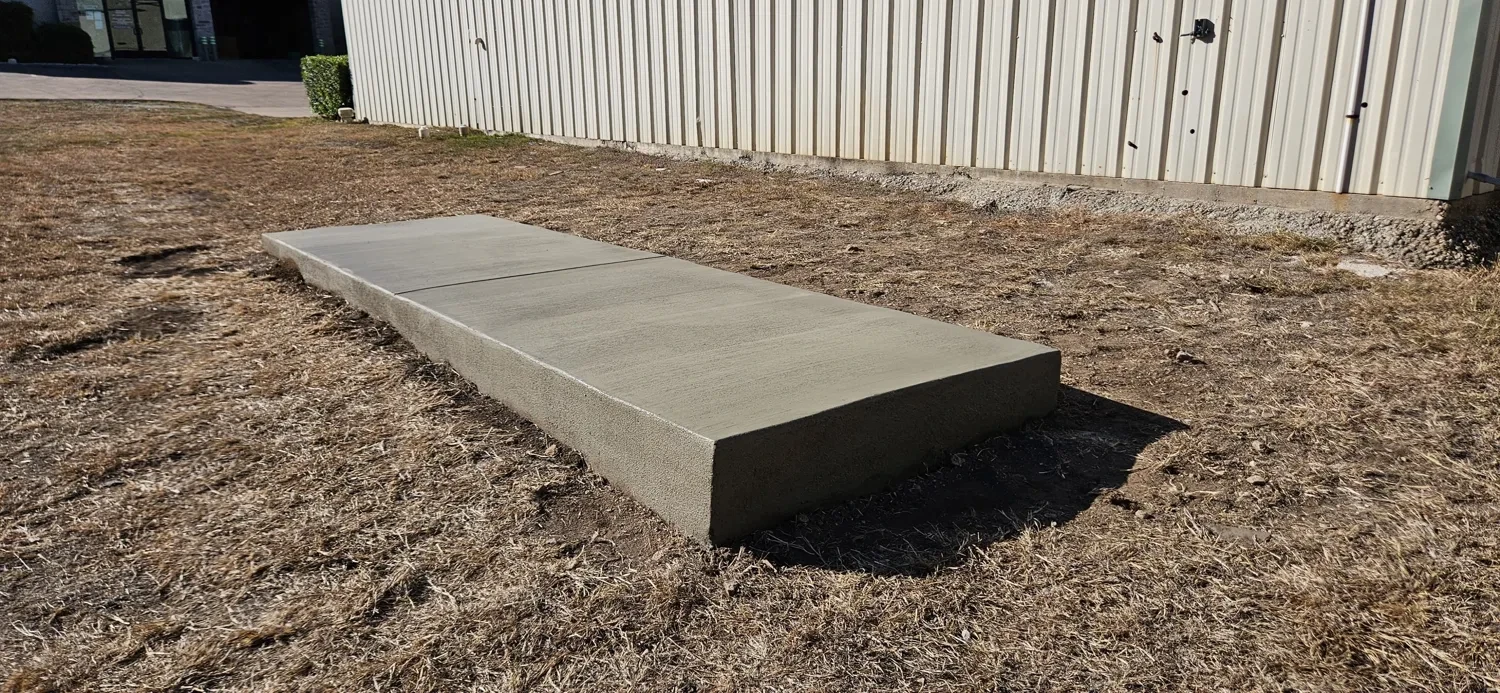
Pads and slabs typically start around $7 to $13 per square foot, with thickness, reinforcement, and access moving the number. A small AC pad prices differently than a 30-foot RV slab, so we quote from a site visit, not a phone estimate we can't stand behind.
Four inches handles sheds and most storage; vehicle and RV pads want five to six inches with heavier reinforcement; shop slabs depend on the equipment. Tell us the heaviest thing that will ever sit on it and we will spec from there rather than selling thickness you do not need.
Accessory structures above certain sizes need a city permit, and most Allen HOAs want approval for anything visible over the fence. The requirements vary by size and neighborhood, so we help you confirm both before the pour instead of after a letter arrives.
Usually yes, subject to setbacks and your HOA's rules on RV storage, which in Allen are often stricter than the city's. We tie the new pad to the existing drive with a proper joint so the two slabs can move independently without faulting.
Exposed edges dry fastest, so in a long drought the clay at the perimeter shrinks first and the support leaves the edge of the slab. We fight that with a compacted base, thickened edges where warranted, and grading that keeps moisture conditions around the pad more even.
Light loads within a few days, structures and vehicles typically after a week or more, and anchoring into the slab has its own timeline. We give you dates for your specific pour instead of one blanket number.
You'll hear back from a real person, usually the same day. No call center, no runaround, no chasing us down.
Booking up fast this season. Or call (469) 234-3236